5 Sci-Fi Movies That Got the Future Surprisingly Right
Science fiction has always been a way for filmmakers to imagine the future, often pushing the boundaries of technology, society, and human behavior. While many sci-fi movies include wild concepts that remain purely fictional, some have predicted future innovations with surprising accuracy.
From artificial intelligence and virtual reality to video calls and surveillance technology, several classic films envisioned ideas that now exist in everyday life. What once seemed impossible has gradually become reality, proving that science fiction can sometimes be closer to science fact than we realize.
Here are five sci-fi movies that got the future surprisingly right.
Key Takeaways
- Many sci-fi films accurately predicted modern technologies decades before they existed.
- Artificial intelligence, virtual reality, and advanced communication tools were all imagined long before becoming mainstream.
- Some movies also predicted social and ethical challenges tied to technological advancement.
- Science fiction often influences real-world innovation by inspiring inventors and engineers.
- The line between fiction and reality continues to blur as technology evolves.
1. Blade Runner (1982)
Ridley Scott’s Blade Runner painted a futuristic world filled with artificial intelligence, advanced robotics, voice-controlled systems, and massive digital advertising screens. While flying cars still aren’t part of daily life, many of the film’s technological ideas became surprisingly accurate.
The movie explored AI-powered humanoid robots known as replicants, raising questions about consciousness, ethics, and the relationship between humans and machines. Today, conversations around AI ethics and human-like robots are becoming increasingly relevant.
The film also predicted the rise of giant urban digital billboards and highly connected cities dominated by technology and surveillance.
2. The Matrix (1999)
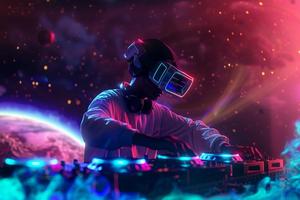
When The Matrix was released, the idea of humans living inside a fully simulated digital reality seemed extreme. Today, virtual reality and immersive digital environments are becoming more sophisticated every year.
The film also explored themes of artificial intelligence controlling systems behind the scenes, something that resonates strongly in the age of algorithms and machine learning. While humanity obviously isn’t trapped inside a simulated world, the movie’s warnings about dependence on technology feel more relevant than ever.
Its influence can also be seen in the development of VR gaming, digital avatars, and discussions surrounding the concept of the “metaverse.”
3. Minority Report (2002)
Steven Spielberg’s Minority Report accurately predicted several technologies that are now part of modern life. The film featured gesture-based computer interfaces, personalized digital advertising, facial recognition systems, and predictive analytics.
At the time, these ideas felt futuristic. Today, touchless interfaces, targeted online ads, and AI-driven prediction systems are everywhere. Facial recognition technology is now used in smartphones, airports, and security systems worldwide.
The movie also sparked important conversations about privacy and surveillance, concerns that continue to grow as technology becomes more advanced.
4. Her (2013)
Spike Jonze’s Her imagined a future where people form emotional relationships with AI-powered virtual assistants. While the movie focused heavily on loneliness and human connection, its technology predictions turned out to be remarkably realistic.
Voice assistants like Siri, Alexa, and ChatGPT-like conversational AI now play a significant role in everyday life. AI systems can hold conversations, answer questions, generate content, and even provide emotional support.
The film captured how deeply integrated AI could become in people’s personal lives, especially as technology becomes more conversational and human-like.
5. 2001: A Space Odyssey (1968)
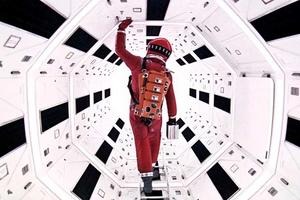
Stanley Kubrick’s 2001: A Space Odyssey introduced audiences to HAL 9000, one of the most iconic AI systems in film history. Long before modern computers became part of everyday life, the movie envisioned voice-controlled artificial intelligence capable of interacting naturally with humans.
The film also predicted tablet-like devices, video calling, and advanced automation decades before they became mainstream. Today, those technologies are so common that they barely feel futuristic anymore.
What makes the film especially impressive is how accurately it captured humanity’s growing relationship with intelligent machines and automated systems.
Conclusion
Science fiction movies often reflect humanity’s hopes, fears, and imagination about the future. While many predictions remain fictional, some films have come astonishingly close to reality, forecasting technologies and societal shifts long before they appeared in real life.
Movies like Blade Runner, The Matrix, and Her remind us that fiction can inspire innovation while also encouraging deeper conversations about ethics, privacy, and human connection in a technology-driven world.
As artificial intelligence, virtual reality, and automation continue advancing, it’s becoming increasingly clear that some of the future imagined by sci-fi filmmakers has already arrived.