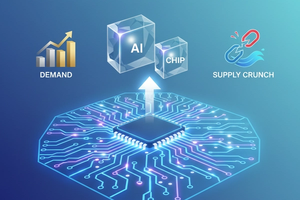
AI Chip Buildout Accelerates: Applied Materials Signals Enduring Demand Amid Supply Crunch
AI Chip Buildout Accelerates: Applied Materials Signals Enduring Demand Amid Supply Crunch
The race to build artificial intelligence capabilities is transforming the semiconductor industry at an unprecedented pace. Applied Materials, a key player in the chip manufacturing sector, recently reported strong demand for its products, driven by surging investments in AI technologies. This trend comes amid ongoing supply chain challenges that have affected numerous industries, creating a complex backdrop for chipmakers and customers alike.
Key Takeaways
- Applied Materials experiences robust demand for chipmaking tools due to the rise of AI applications.
- The company anticipates significant capital expenditures in the semiconductor sector, despite ongoing supply chain constraints.
- AI-driven workloads are pushing the need for more advanced chip designs, increasing the complexity of manufacturing processes.
- Major tech firms are ramping up investments in AI, contributing to a sustained demand for high-performance chips.
- The global semiconductor supply chain remains under pressure, impacting production timelines and delivery schedules.
- Applied Materials' position as a leading supplier allows it to capitalize on the AI boom while navigating supply challenges.
- Future innovations in chip technology are expected to focus on efficiency and performance, aligning with the demands of AI workloads.
The Demand Surge in AI Chips
As AI technologies proliferate, companies are racing to upgrade their hardware capabilities. This urgency has led to a spike in demand for semiconductors that can handle the computing power required for AI applications. Applied Materials, which specializes in providing equipment and services for semiconductor manufacturing, is seeing its fortunes rise in this environment. Their products are essential for building the intricate structures of advanced chips, which are now in high demand.
In a recent earnings call, CEO Gary Dickerson highlighted that the company is witnessing an unprecedented increase in capital expenditures among its customers. “The momentum we’re seeing is not just a flash in the pan. It’s a fundamental shift in how companies are investing in their AI capabilities,” he stated. This investment trend is expected to continue, providing a significant boost to the semiconductor sector.
Navigating Supply Chain Challenges
While the demand for AI chips is booming, the industry is still grappling with supply chain disruptions that have persisted since the pandemic. From shortages of raw materials to delays in shipping, manufacturers are facing hurdles that complicate production schedules. Applied Materials is not immune to these challenges, yet its established relationships and strategic positioning in the market afford it some resilience.
The company has reportedly been proactive in securing critical components and materials to mitigate potential delays. However, industry analysts caution that the ongoing supply crunch could lead to increased lead times for chip production. As a result, companies looking to invest in AI technologies must be prepared for longer wait times, which could affect their operational timelines.
The Future of AI and Semiconductor Manufacturing
Looking ahead, the landscape of semiconductor manufacturing is poised for transformation. The complexity of AI workloads demands not only more powerful chips but also chips that can operate efficiently under varied conditions. This requirement is prompting a shift in design philosophy among semiconductor manufacturers.
Applied Materials is at the forefront of this innovation wave, investing in technologies that enhance manufacturing processes. This includes advancements in materials science and machine learning applications to streamline production. As the demand for AI chips grows, these innovations will play a crucial role in determining which companies can meet the evolving needs of the market.
Conclusion
The AI chip buildout is more than just a trend; it represents a seismic shift in how technology companies are equipping themselves for the future. Applied Materials stands as a pivotal player in this transformation, signaling enduring demand even amid supply chain constraints. As firms invest heavily in AI, the semiconductor industry must adapt and innovate to keep pace. Companies that can navigate these challenges while delivering the performance needed for advanced AI applications will emerge as leaders in the next generation of technology. The journey has just begun, and the stakes have never been higher.