The Rise of AI in Film Production
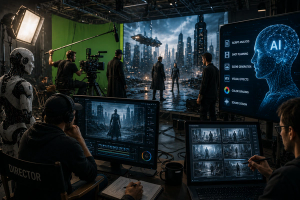
Artificial intelligence is rapidly changing the film industry, transforming how movies are planned, produced, edited, and marketed. What once required massive production teams and months of manual work can now be streamlined with AI-powered tools that enhance efficiency and unlock new creative possibilities.
From generating realistic visual effects to assisting with script analysis, AI is becoming an essential part of modern filmmaking. While some fear that technology could replace human creativity, many filmmakers see AI as a powerful tool that supports artistic vision rather than replacing it.
Here’s how AI is reshaping film production and why its influence continues to grow.
Key Takeaways
- AI is improving efficiency across every stage of film production.
- Filmmakers use AI to save time, reduce costs, and enhance creativity.
- AI-powered editing and visual effects are becoming increasingly advanced.
- Human storytelling and creative direction remain central to filmmaking.
- Ethical concerns surrounding AI in film continue to spark debate.
Smarter Pre-Production Planning
Before cameras even start rolling, AI is already helping filmmakers make smarter decisions. AI-powered software can analyze scripts, predict audience engagement, and even estimate box office performance based on trends and historical data.
Studios are also using AI tools to assist with casting suggestions, scheduling, budgeting, and location scouting. These technologies help production teams reduce risk and improve efficiency during the planning process.
Storyboard generators and virtual visualization tools powered by AI are allowing directors to experiment with scenes long before filming begins, saving both time and production costs.
AI-Powered Visual Effects and CGI
Visual effects have always been one of the most time-consuming and expensive parts of filmmaking. AI is dramatically speeding up this process.
Today, AI can generate realistic backgrounds, enhance CGI characters, and automate complex animation tasks that previously required large teams of artists. Deep learning tools can also improve motion capture and facial animation, making digital characters look more natural and expressive.
AI has additionally been used for de-aging actors, recreating historical figures, and creating hyper-realistic environments that blend seamlessly with live-action footage.
Faster and More Efficient Editing
Film editing is another area being transformed by AI. Editing software can now automatically organize footage, identify the best takes, and even generate rough cuts based on a director’s preferences.
AI tools are also improving color correction, sound cleanup, subtitle generation, and scene transitions. Tasks that once took editors days or weeks can now be completed much faster without sacrificing quality.
This allows creative teams to spend more time refining storytelling instead of handling repetitive technical work.
Personalized Content and Audience Insights
Streaming platforms and production companies increasingly rely on AI to understand viewer behavior and preferences. By analyzing audience data, studios can identify trends, predict successful genres, and tailor marketing strategies more effectively.
AI-driven recommendations on streaming platforms have also changed how audiences discover films and TV shows. This data-driven approach is influencing not only distribution but even the kinds of stories being developed.
While some critics worry this could lead to formulaic content, others argue that audience insights simply help studios better understand viewer interests.
Ethical Concerns and the Future of Creativity
As AI becomes more advanced, it also raises important ethical questions. Concerns about copyright, deepfakes, digital actor replicas, and job displacement have become major topics in the entertainment industry.
Many filmmakers stress that AI should be viewed as a creative assistant rather than a replacement for human imagination. Storytelling, emotional depth, and artistic vision remain deeply human qualities that technology cannot fully replicate.
The future of film production will likely involve collaboration between human creators and intelligent tools, combining artistic creativity with technological innovation.
Conclusion
AI is reshaping the film industry in remarkable ways, from pre-production planning to post-production editing and visual effects. Its ability to streamline workflows and unlock new creative opportunities is helping filmmakers push the boundaries of storytelling.
At the same time, the rise of AI in film production highlights the importance of balancing innovation with ethical responsibility. While technology will continue evolving, the heart of filmmaking will always remain rooted in human creativity and emotion.
The future of cinema is not about humans versus AI, it’s about how the two can work together to create stories that captivate audiences in entirely new ways.